Favicon troubleshooting
Can someone help with favicon
“Can someone help with favicon” was the title of a post in r/neocities on August 16, 2026. The author wrote: “Can someone help me with favicons like I can load it on computer but it just won't load on iOS or One UI”. The practical first check is to stop treating one converted file as every platform's icon. A browser tab, an iOS Home Screen bookmark, and an installed web app can use different declarations and assets.
Convert a PNG to ICO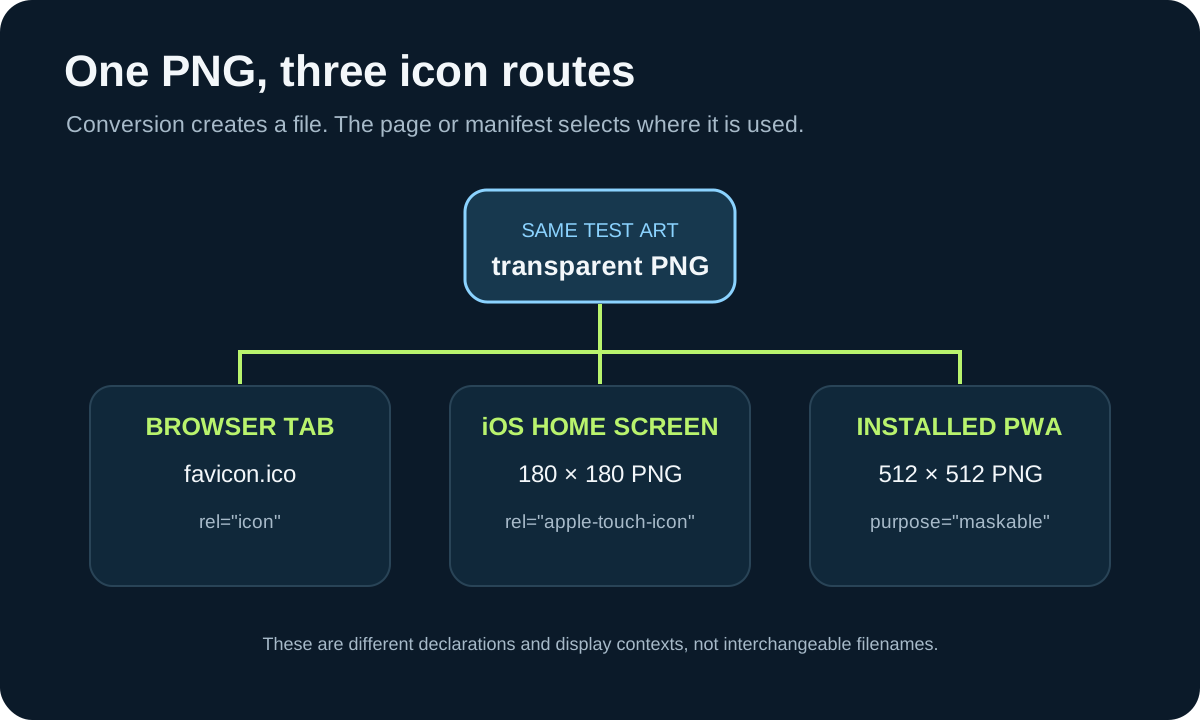
An ICO file by itself does not configure every favicon destination. Keep a browser-tab icon, an iOS touch icon, and an installed PWA icon as separate routes; then verify the actual downloaded dimensions and alpha pixels for each file. This article's local sample measured four ICO entries, one 180 × 180 PNG, and one opaque 512 × 512 maskable PNG. Those are experiment outputs, not universal requirements.
The measurements below describe one synthetic 512 × 512 source and the files generated from it. They do not claim a real iPhone or Android launcher was tested.
Why one favicon can appear differently across devices
The Reddit author reports that an icon loaded on a computer but not on iOS or One UI. That is a useful symptom report, not proof of its cause. A page can offer a browser icon while omitting a platform-specific touch icon or web app manifest entry. A platform may also crop an icon to fit its display shape. Check the declarations, fetched assets, and decoded pixels before deciding which part failed. In this local cross-device study, I kept the artwork constant and changed only the output route. That makes the three file measurements easier to compare, while keeping the limits clear: one synthetic source cannot diagnose the Reddit author’s devices.
For someone searching convert a png to an icon, the conversion is only the file-making step. It does not create HTML link elements, write a web app manifest, or guarantee that every client chooses the same image. Keep the file output and the page configuration in the same troubleshooting checklist.
Can someone help me with favicons like I can load it on computer but it just won't load on iOS or One UI
Local file measurements from one source image
I made a synthetic 512 × 512 transparent PNG, exported a multi-entry ICO, an 180 × 180 PNG touch-icon test file, and a full-bleed 512 × 512 PWA maskable test file. I reopened each saved output and decoded it with Pillow 12.3.0. The source art includes corner details so the mask experiment can count what falls outside its chosen circle.
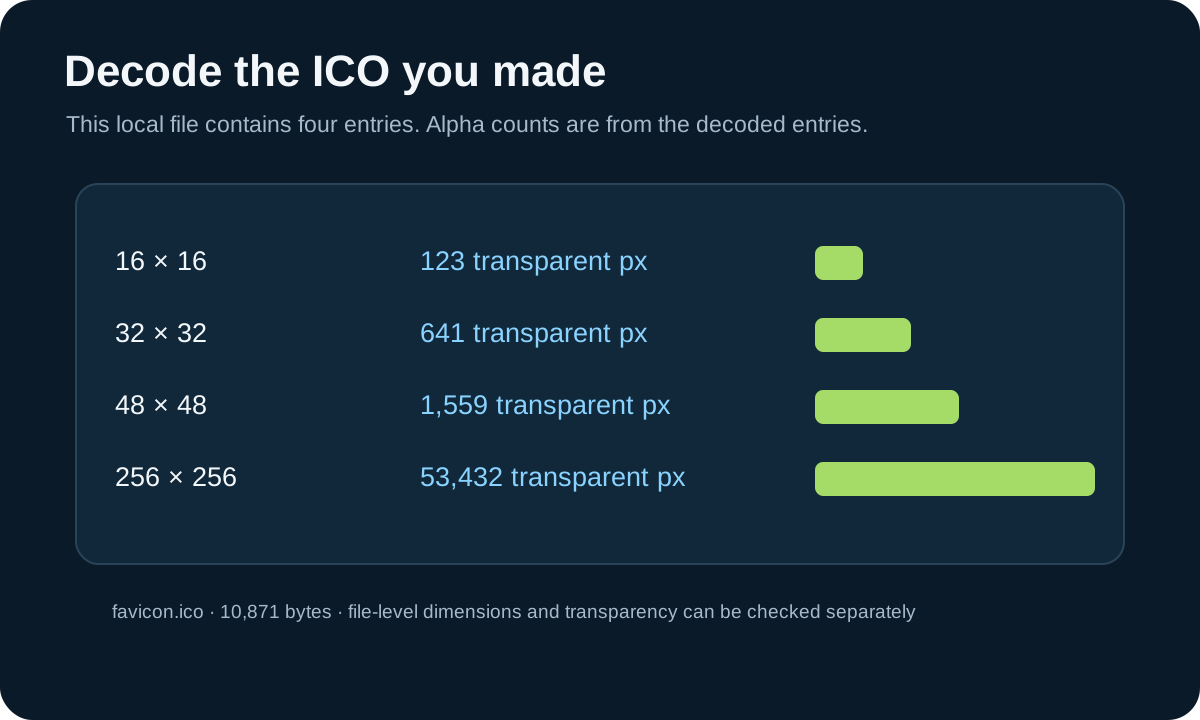
The table reports actual bytes, dimensions, and pixel counts read from those files. Fully transparent means alpha equals zero; alpha below 255 includes both transparent and partially transparent pixels. The four ICO rows are entries inside one 10,871-byte file, not four separate downloads.
The mask test is a model, not a device result
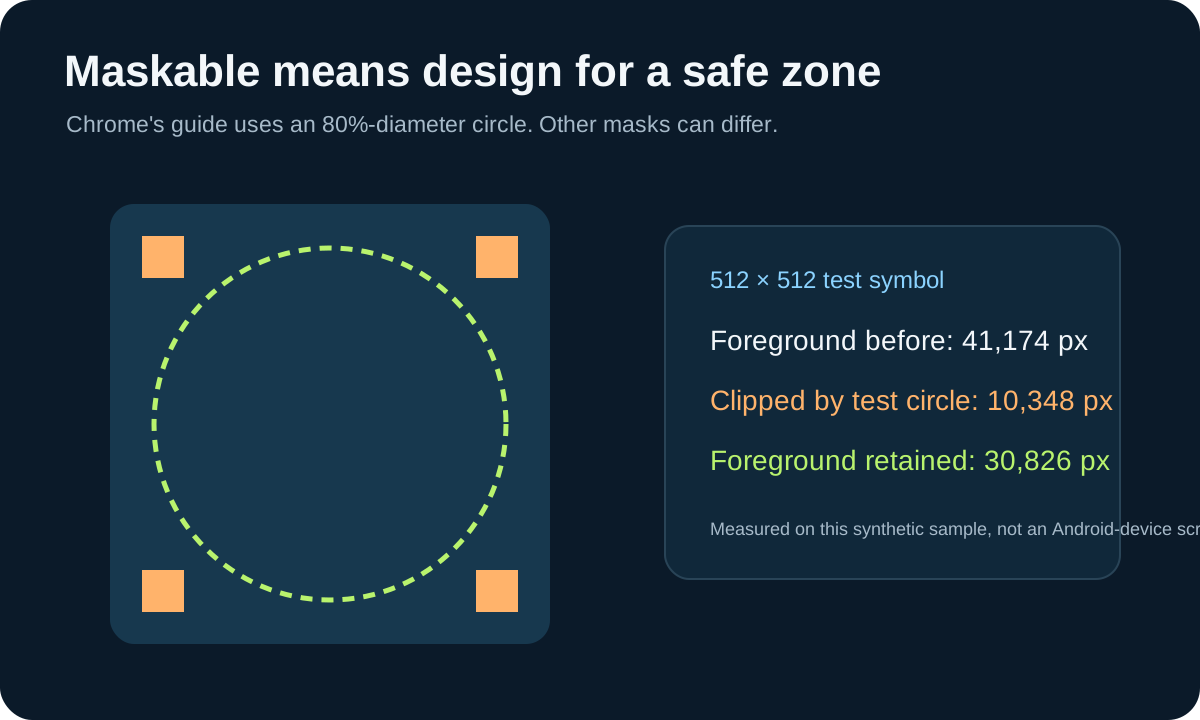
Chrome's maskable icon guide describes a safe area using a circle whose diameter is 80% of the image. Applying that circle to this synthetic sample left 30,826 foreground pixels inside it and clipped 10,348 of the 41,174 foreground pixels. This is a count for the test artwork and the stated circle geometry. It does not predict the exact crop made by every Android launcher or prove how a particular phone displayed the icon.
The practical check is to keep important details within the intended safe zone, inspect the manifest entry, and then test on the destination devices you care about. The mask preview below is a crop calculation from the source PNG, not a screenshot from a phone.
What this experiment does and does not establish
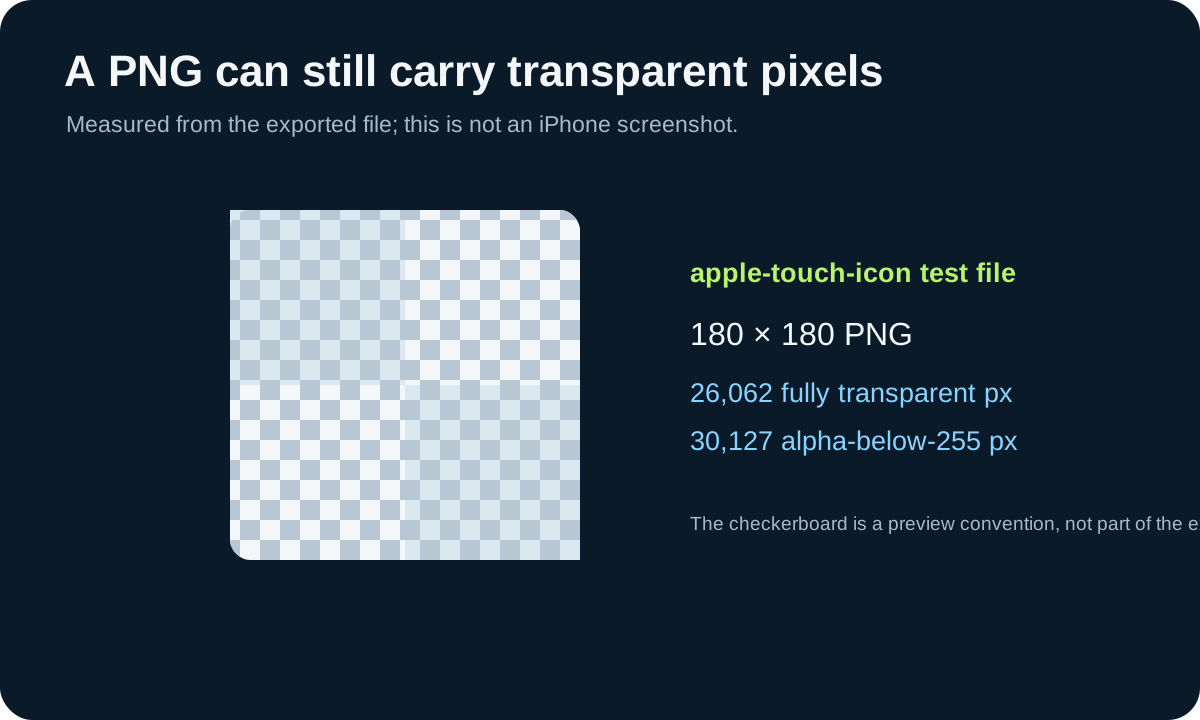
It establishes that this generated ICO contains 16, 32, 48, and 256 pixel entries and that the saved touch-icon PNG contains transparent pixels. It also establishes that the test maskable PNG is fully opaque and that the defined circular mask excludes some corner artwork. The values matter as a file-level baseline: if a future run using the same script produces different entries or alpha counts, the output changed before it ever reached a phone. Compare hashes, byte counts, dimensions, and decoded alpha to locate that change. These values are not acceptance thresholds for all icon files.
It does not establish that those exact sizes are required for every browser, that an ICO is the only browser icon format, or that the sample reproduces a specific user's device failure. For an individual site, inspect its HTML, manifest, network requests, and downloaded files, then verify on the affected browser and device.
Decoded files from the local cross-device icon experiment
Generated locally on September 28, 2026 from one synthetic 512 × 512 transparent PNG. Files were reopened and decoded with Pillow 12.3.0. Fully transparent counts use alpha = 0; alpha-below-255 counts include partial transparency.
| Saved output | Decoded dimensions / entries | Bytes | Fully transparent pixels | Alpha below 255 |
|---|---|---|---|---|
| desktop-favicon.ico entry | 256 × 256 | 10,871 (whole ICO) | 53,432 | 60,356 |
| desktop-favicon.ico entry | 48 × 48 | 10,871 (whole ICO) | 1,559 | 2,217 |
| desktop-favicon.ico entry | 32 × 32 | 10,871 (whole ICO) | 641 | 1,008 |
| desktop-favicon.ico entry | 16 × 16 | 10,871 (whole ICO) | 123 | 256 |
| apple-touch-icon-180.png | 180 × 180 | 5,479 | 26,062 | 30,127 |
| pwa-maskable-512.png | 512 × 512 | 10,332 | 0 | 0 |
One synthetic source; Pillow 12.3.0; local decode only. The mask model used a circle diameter of 80% of the canvas: foreground before 41,174 pixels, clipped 10,348, retained 30,826. No physical phone or launcher screenshot is included.



Check the three routes separately
- 01Browser tab: inspect the page declaration
Use a page icon declaration such as rel="icon" for the browser favicon route. A converter only creates an image file; it does not add the declaration to your page. Inspect the output file and the page's icon link separately.
- 02iOS Home Screen: provide a touch icon
Apple's archived Safari Web Content Guide documents PNG icons linked with rel="apple-touch-icon" for Web Clips. It shows a 180 × 180 example. Treat that as the size in the cited example, not a promise that every current destination requires only that size.
- 03Installed PWA: check the manifest purpose
A PWA manifest can identify an icon with purpose="maskable". Chrome's maskable guidance uses an 80%-diameter circle as a safe-zone guide. Artwork outside a destination's mask may be clipped, so leave important details inside a tested safe area.
- 04Decode what you actually saved
For every downloaded file, read its dimensions and decode its pixels. For ICO, enumerate each embedded image entry. For PNG, count fully transparent and partially transparent pixels separately. A filename or page preview does not prove that the export contains the intended layers or alpha.
FAQ
Favicon and app icon questions
Does converting a PNG to ICO configure iOS too?
No. Conversion creates the ICO file. iOS Home Screen web icons use a separate page declaration and PNG touch-icon asset in Apple's documented web-content model.
Does a 180 × 180 PNG prove the iOS icon will display correctly?
No. This experiment only decoded a local 180 × 180 PNG. The cited Apple guide includes a 180 × 180 example, but this was not tested on an iPhone.
Will an installed PWA show all four corners of its icon?
Not necessarily. A mask can crop artwork outside its safe area. Chrome's maskable guide describes an 80%-diameter circle, but the sample crop here is a model rather than a device test.
Did the experiment reproduce the Reddit author's problem?
No. It measured synthetic files locally and did not test the author's site or devices. The thread supplies a dated user report, not a verified diagnosis.